Some of it’s due to practical (read: mundane) distractions, though more of it’s intentional, but I’ve resided on the margins of “the socials” lately, conducting deep dives elsewhere.
This variety of strategic disassociation from these platforms is tricky, as a virtual retreat, even if incremental, places me at an increased distance from the healthful network of writers and artists I’ve established over the course of twelve years or so. (I know: a trite gripe.) If anything, I feel a flicker of shame in admitting that a certain degree of competitiveness might suffer in that surgically-specific withdrawal (think of it as less wholesale “fomo,” and more “promo fomo.”)
This interactive vacillation calls to mind (from a great distance) something Steve Hammer (who died in his sleep in 2022) wrote in his weekly Nuvo column back in 2011. Hammer, in a piece titled “A Tough City for a Dreamer,” is discussing the internet altering the literary landscape. “Voices once confined are now blogged to the world,” he writes, “even if readership is still confined to a small circle of friends and random visitors who stumble by via a search engine. / “[Writers are] making the same amount of money—none—as they did two decades ago, but at least Indiana writers now have a public forum. It’s now possible to be a writer in Indiana who actually gets read.”

I checked in this past weekend and was humbled discover that David Surface, as part of his excellent and revealing “One Good Story” Substack series, has posted an insightful dissection of the story, “Fingers Laced, as Though in Prayer,” which appeared in my collection, The Skeleton Melodies. (Readers and writers alike would benefit from his ongoing author-interview project, Strange Little Stories.) There are thematic elements that Surface points out which had never occurred to me—one of the more sustaining sensations in creative mediums: often, artists are too close to their work, and it takes fresh, objective eyes to indicate the elusive.
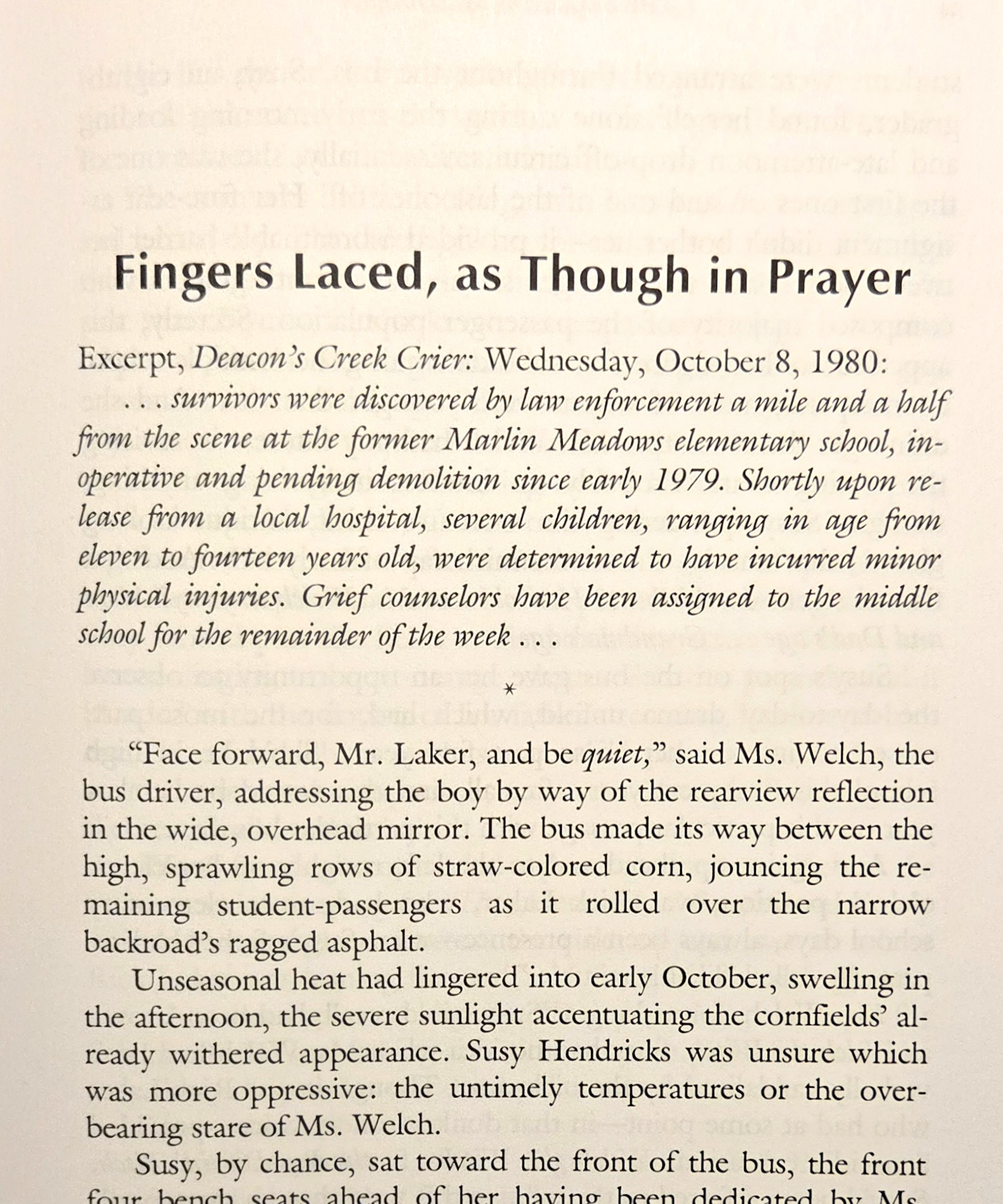
By way of review or commentary, audiences frequently provide analysis of creative works (though it’s more common that, within the centrifugal bickering composing many social posts, what they believe to be a critical “critique” amounts to little more than clumsy trolling); but Surface is adept at detecting and interpreting one of the most crucial aspects of writing in this particular genre: the humanity woven within the horror.
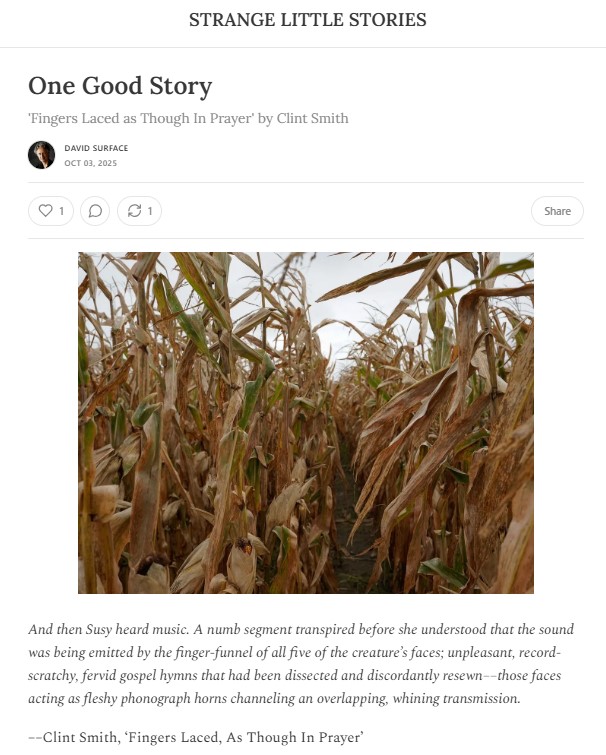
I have a tremendous respect for David Surface. His thought- and heart-provoking stories startled and inspired me long before establishing the arterial connection provided by social media. Like much artistic output, through his stories, there’s a confessional resonance which provides subtle glimpses at their composer. (I have further thoughts on his work, particularly his collections, Terrible Things (2020) and The Things That Walk Behind Me (2024).)
This is, more than anything, a complicated “thank you” to David Surface, in his investing so much time appreciating and supporting other writers’ writing. I’ll again borrow from Mr. Hammer: “And so we salute those lonely…wordsmiths who hope to create a better, or at least more logical, world with the simple power of their words.”
Writers like David Surface make this world less lonely.
 Clint Smith Fiction