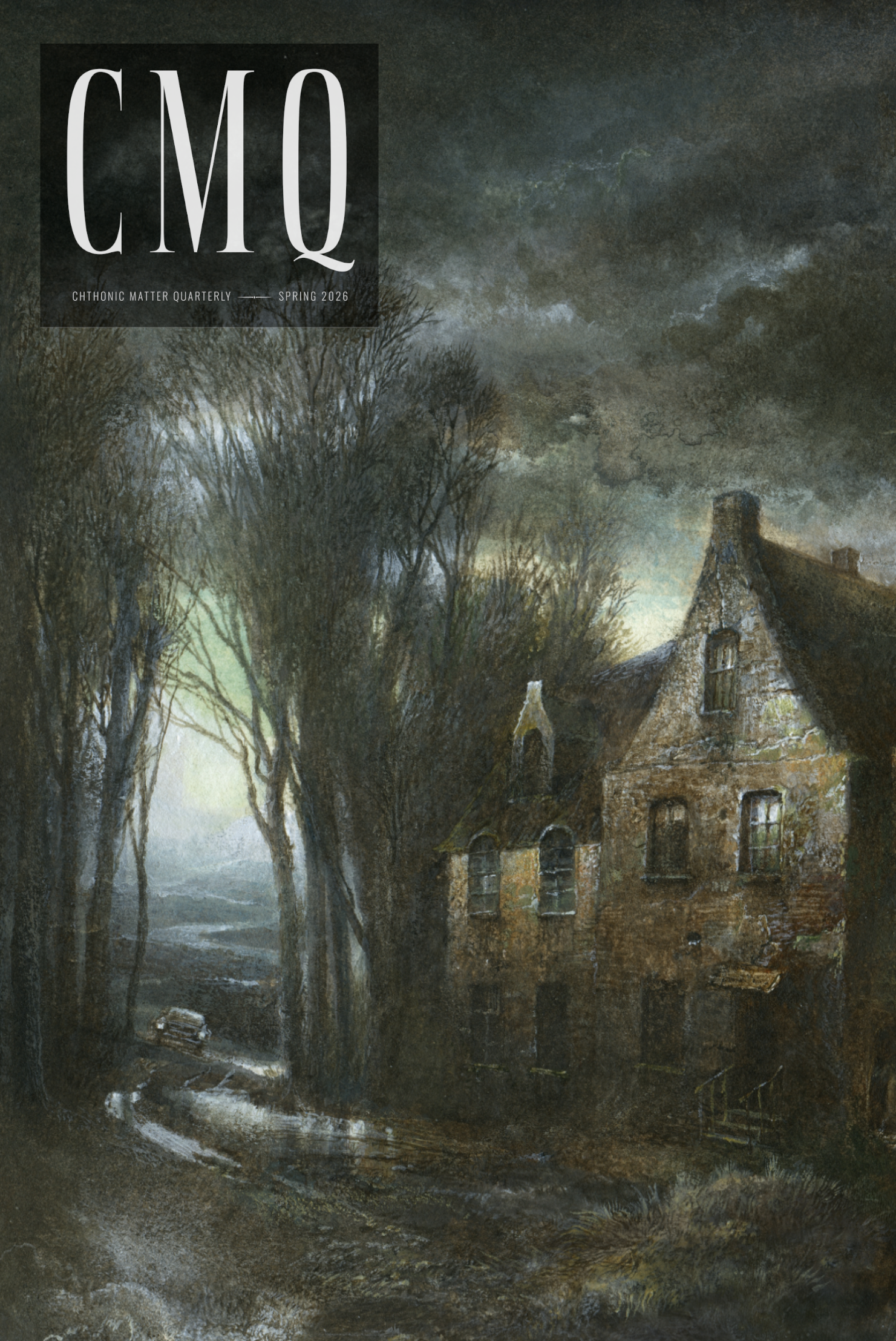
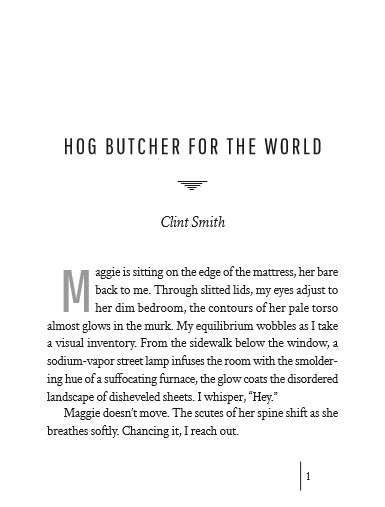
My short story, “Hog Butcher For the World,” plays leadoff for Chthonic Matter Quarterly, #13.
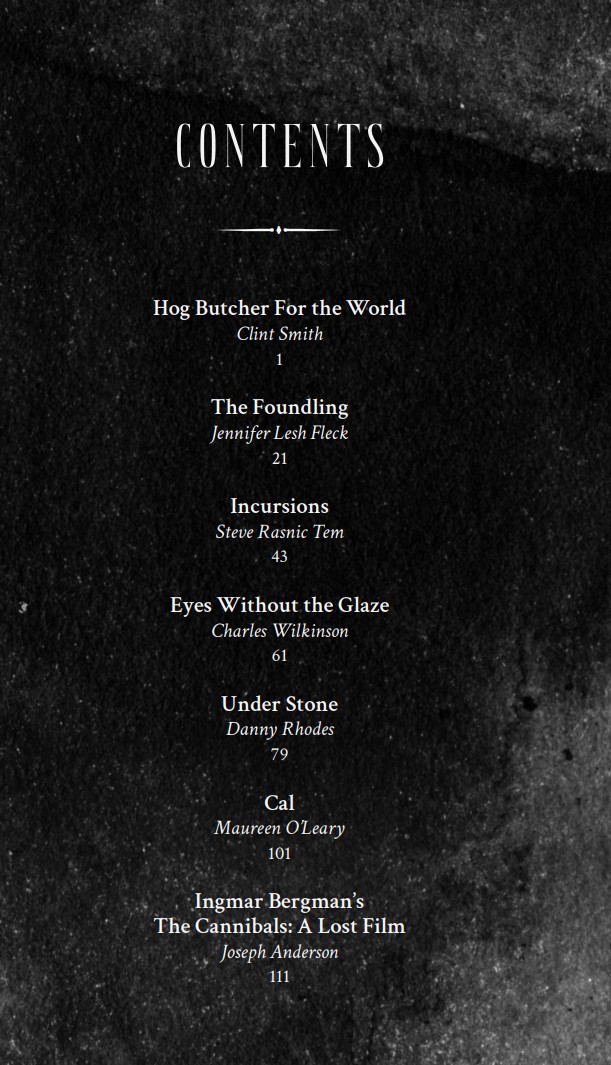
As is consistently the case with C.M. Muller’s projects, the table of contents for the Spring, 2026 installment of CMQ is replete with adroit voices, with stories from Jennifer Lesh Fleck, Steve Rasnic Tem, Charles Wilkinson, Danny Rhodes, Maureen O’Leary, and Joseph Anderson.
A few words on this one.
My time living and learning in Chicago marked a crucial shift in my life; and it’s arguable that adopting the craft of cooking served to save it. As a sense of purpose took shape, I grew sensitive to patterns—both in analyzing the poetry of my environment, and in the subcuticular metaphors composing my mind. These repeated designs never really change (I know where to dig in the scattered copses, it’s just a matter of how deep); and even now as I write, I’m cognizant of my own fictive obsessions and how I endeavor to morph those preoccupations into writing that possesses some merit—I strive for pieces that are redeemable, but I’ll settle for interesting.
In a few months, Lethe Press will publish my novella, The Sacraments of Blackgum Lake. I started jotting down a rickety outline for this long story in June, 2021. (I anticipate writing a little more about the compulsions behind Blackgum downstream.) Often, as I stagger through the nascent drafts of a story, I misinterpret the repeated preoccupations as lazy ways out (some pious self-consciousness—who the hell knows), when I should be interpreting these sketches as precious excess from the spillways of proximal projects. Then again, as a writer, there’s a fine line between outright repetition and maturing one’s signature themes.
Whether mythic or explicit, for many years I’d wanted to find a way to incorporate the mystique of John Dillinger’s bloody run into a writing project, particularly his “reign of terror” which lasted a mere year, beginning in Daleville, Indiana, in the summer of 1933, and concluding in front of Chicago’s Biograph Theater in July, 1934.
I’d concentrated significant research into Dillinger in service of The Sacraments of Blackgum Lake; but, in the wake of completing the novella, there was an excess of irregular remnants scattered on my mental workbench. I still had ideas for how to utilize these fictive fragments, and one of the exercises produced “Hog Butcher For the World,” a (clearly) Chicago-centric story which (among other topics: the culinary craft and the bonds the cooking field yields) preoccupies itself with excised persona, and the contortions—these black-market plastic surgeries of the soul—we often undergo in order to convince our friends, and ourselves, that some sort of altruism exists in concert with innate depravity.

 Clint Smith Fiction