Black-Market Plastic Surgeries of the Soul: “Hog Butcher For the World” Appearing in CHTHONIC MATTER QUARTERLY

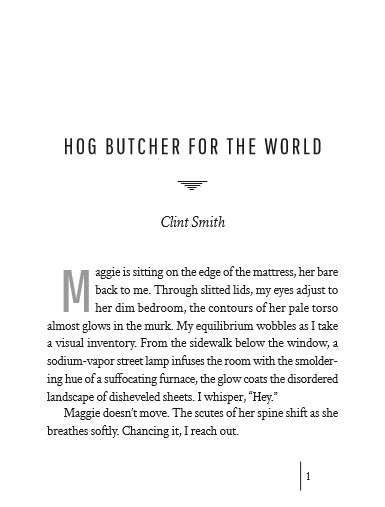
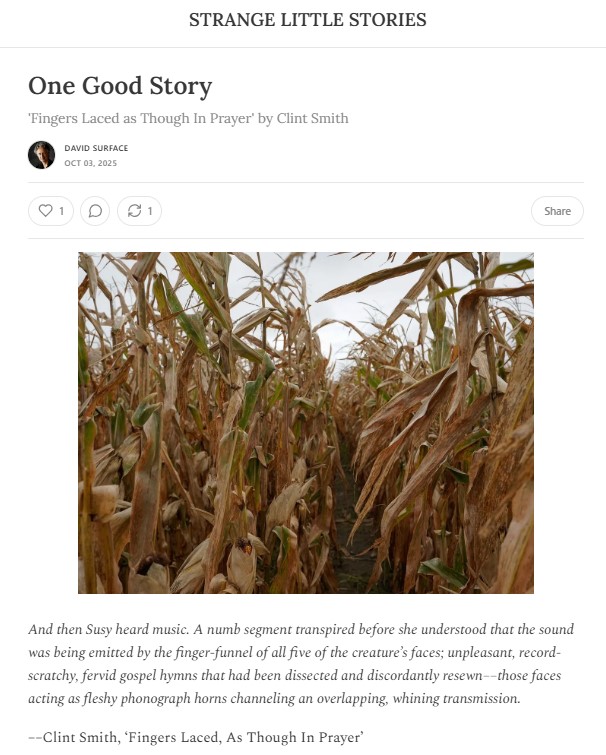
My short story, “Hog Butcher For the World,” plays leadoff for Chthonic Matter Quarterly, #13.

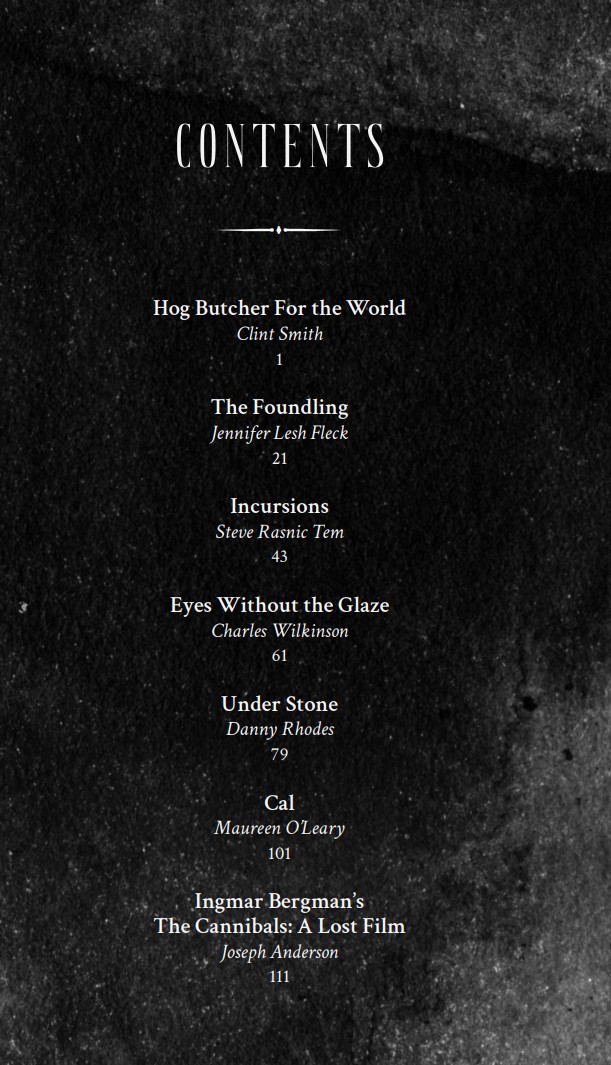
As is consistently the case with C.M. Muller’s projects, the table of contents for the Spring, 2026 installment of CMQ is replete with adroit voices, with stories from Jennifer Lesh Fleck, Steve Rasnic Tem, Charles Wilkinson, Danny Rhodes, Maureen O’Leary, and Joseph Anderson.

A few words on this one. 

My time living and learning in Chicago marked a crucial shift in my life; and it’s arguable that adopting the craft of cooking served to save it. As a sense of purpose took shape, I grew sensitive to patterns—both in analyzing the poetry of my environment, and in the subcuticular metaphors composing my mind. These repeated designs never really change (I know where to dig in the scattered copses, it’s just a matter of how deep); and even now as I write, I’m cognizant of my own fictive obsessions and how I endeavor to morph those preoccupations into writing that possesses some merit—I strive for pieces that are redeemable, but I’ll settle for interesting.

In a few months, Lethe Press will publish my novella, The Sacraments of Blackgum Lake. I started jotting down a rickety outline for this long story in June, 2021. (I anticipate writing a little more about the compulsions behind Blackgum downstream.) Often, as I stagger through the nascent drafts of a story, I misinterpret the repeated preoccupations as lazy ways out (some pious self-consciousness—who the hell knows), when I should be interpreting these sketches as precious excess from the spillways of proximal projects. Then again, as a writer, there’s a fine line between outright repetition and maturing one’s signature themes.

Whether mythic or explicit, for many years I’d wanted to find a way to incorporate the mystique of John Dillinger’s bloody run into a writing project, particularly his “reign of terror” which lasted a mere year, beginning in Daleville, Indiana, in the summer of 1933, and concluding in front of Chicago’s Biograph Theater in July, 1934.

I’d concentrated significant research into Dillinger in service of The Sacraments of Blackgum Lake; but, in the wake of completing the novella, there was an excess of irregular remnants scattered on my mental workbench. I still had ideas for how to utilize these fictive fragments, and one of the exercises produced “Hog Butcher For the World,” a (clearly) Chicago-centric story which (among other topics: the culinary craft and the bonds the cooking field yields) preoccupies itself with excised persona, and the contortions—these black-market plastic surgeries of the soul—we often undergo in order to convince our friends, and ourselves, that some sort of altruism exists in concert with innate depravity.

SUFFERING THE OTHER: Cover Reveal

Justin Steele, in publication partnership with Sam Cowan, has revealed the cover art for the forthcoming Dim Shores anthology, Suffering the Other. The amazing design comes courtesy of RewX (Andrew S. Fuller).

Suffering the Other is a charity compilation benefitting the Transgender Law Center and the Refugee and Immigrant Center for Education and Legal Services (RAICES). After production costs, all proceeds will be split between the two organizations. I’m proud of not only the principles of this project, but of standing shoulder-to-shoulder with such a kaleidoscope of exceptional writers. Preorders should be available in December, ahead of an early-2026 release. And in sequence of appearance, here’s the roster of twenty-four writers along with our stories:

  • Kurt Fawver, “The KnowQuest AI Chatbot Answers All Your Questions About Britemol C”
  • A. J. Sharpe, “Sore Thumb”
  • Marigold Rowell, “Salt Blossoms”
  • A.C. Wise, “Sea Wives”
  • Cheyenne Shaffer, “Ursula the Powerful”
  • Bitter Karella, “The Divine Feminine”
  • Clint Smith, “January Sick”
  • David Peak, “Crawling Out of Black Sun”
  • Erica Ruppert, “Nor Stone, Nor Earth, Nor Boundless Sea”
  • Gwendolyn Kiste, “My Sister, The Abyss”
  • Matthew Cheney, “Queer Horror, and Other Stories”
  • Jeffrey Thomas, “Song of the Loved”
  • J. J. Steinfeld, “The Suicide Inspector”
  • Alexander Hay, “LEAD”
  • Pamela Weis, “An Abomination”
  • Jonathan Lees, “To Those That Have Lost Hope”
  • Laura Mauro, “Ptichka”
  • Bogi Takacs, “A Technical Term, Like Privilege”
  • Lee Thomas, “Kisses from the Pain Chamber”
  • Lisa Cai, “The Eighth Cigarette”
  • Robin Rose Graves, “Her True Face”
  • Nadia Bulkin, “Infested”
  • Wen Wen Yang, “Ghost Festival in the Desert”
  • Jennifer DeLeskie, “You Shall Love Your Crooked Neighbor with Your Crooked Heart”
Suffering the Other (Dim Shores, 2026), cover art by RewX

####

My first job in the foodservice industry was at a chain Mexican restaurant (technically Tex-Mex—R.I.P. Don Pablo’s and the erstwhile DF&R Restaurants). In terms of vocation and subsistence, I had no clue what I was doing. I was in my late-teens and functionally a fucking mess. (Soon, things would get messier before coherence kicked in.) I would have no prediction of it then, but eating, cooking, and maintaining close proximity to Latin-influenced cuisine would be one of the most formative experiences in my career—it would certainly be a valuable primer prior to attending culinary school in Chicago, where I’d go on to bond with eclectic culinarians from all over the world—cooks from Jamaica, India, Korea, Greece.

But it was that Tejano restaurant that served as my first experience interacting and forming work-based friendships with people who were living in the United States to enhance the quality of their, and their family’s, lives. As time elapsed and kitchen-work fostered some semblance of trust, anecdotes (guarded, of course) were shared about crossing the Rio Grande, about leaving loved ones and relatives (children, most lamentably), along with their identity, behind in Mexico. At one point, a veteran cook (living with a number of fellow employees in a cramped apartment that exceeded capacity) revealed that they pooled their paychecks and, in designated rotations, sent the accumulated funds back home to their families. He was describing their in-house routine of remittance—a critical monetary lifeline for, among others, the impoverished.

Because the circumstances didn’t directly affect me (my existence was, and is, culturally comfy compared to folks who, in this country, face overwhelming challenges and uncertainty on a daily basis); but it was the observable fear that bothered me most. In the mid-90s, the verbal tool (whether used in jest or with terrifying sobriety) employed as a compliance threat was the Immigration and Naturalization Services. INS was dissolved in 2003, but was re-sutured into three entities—one of the agencies being, as it presently exists in its paramilitary incarnation, ICE.

I was naive back then, but then again—before the daily deluge of nearly-undigestible news—a lot of us were. I was young, but that’s no excuse. As complicated as I believed my ethos to be, the suburban spectrum through which I viewed and judged the world was unbearably simplistic. Now, nearly thirty years later, we’re situated with an administration—along with its MAGA acolytes—glorifies fear and relishes its cruelty. And while not quite as damning, more than anything, they exalt in an unforgivable complicity and philosophical and political simplicity.

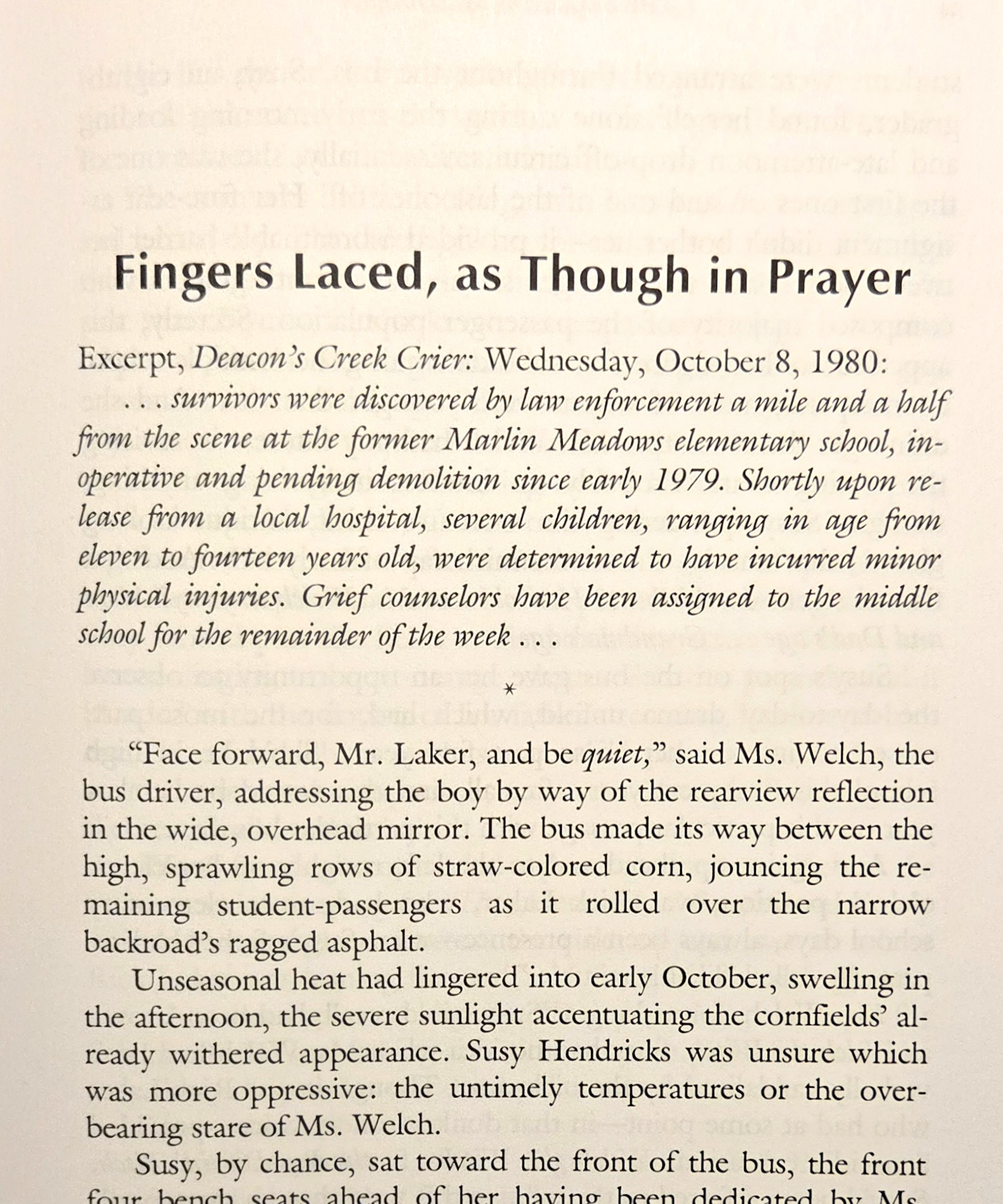
“January Sick” by Clint Smith appearing in Suffering the Other

All right: that was a bit of a detour, but I need to revisit this compartment of commentary as a means of maintaining clarity—both in the fictive realm, and in a real world which grows, for me, more intolerable and unrecognizable. 

My contribution to Suffering the Other is a horror story titled “January Sick” that functions under two intents: as a device to examine the robust terror being gleefully deployed on not only immigrants, but, generally, people of color. But the story is also a distilled indictment on the legions who attended and exalted in the insurrection at the Capitol in January, 2021. I’m confident that the monsters in my story have always existed, but I’ll never be at ease with the celebrated spectacle of their heinous behavior—I’ll never be at peace with how comfortable these creatures have become in flaunting their hate.